
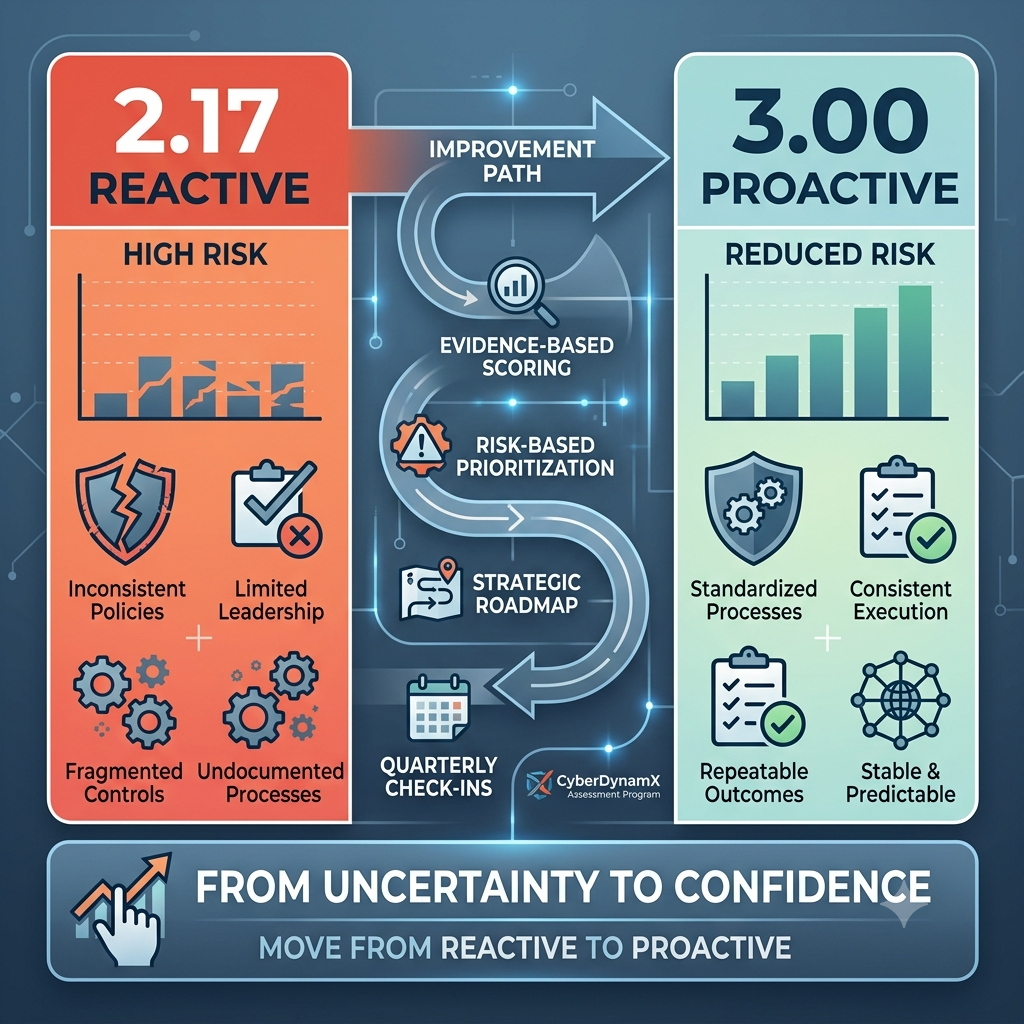
A maturity score is more than a number — it’s a risk indicator. A score of 2.17, like the one shown in the Curtis Company example, tells a clear story:
The organization has defined some cybersecurity practices, but many are still reactive, inconsistent, or incomplete. This creates elevated exposure to cyber risk.
What 2.17 Really Means
A score in the low‑to‑mid 2 range typically indicates:
- Policies exist, but enforcement is inconsistent
- Some processes are documented, but not standardized
- Technical controls are partially implemented
- Leadership involvement is limited
- Supply chain risk is underdeveloped
- Incident response and recovery are not fully mature
- Identity and access management has gaps
- Monitoring is incomplete or informal
These aren’t failures — they’re opportunities.
Why 3.00 Is the Target
A maturity level of 3.00 represents:
- Defined processes
- Proactive behavior
- Consistent implementation
- Repeatable outcomes
- Reduced risk exposure
- Stronger resilience
It’s the point where cybersecurity becomes stable and predictable.
Where Organizations Typically Score Low
In the Curtis Company example, the lowest‑scoring areas included:
- Organizational context
- Roles and responsibilities
- Supply chain risk
- Identity and access management
- Continuous monitoring
- Incident mitigation
- Recovery execution
These categories represent high‑risk gaps that can significantly impact operations.
How CyberDynamX Helps Improve Maturity
The CyberDynamX Assessment Program provides:
- Evidence‑based scoring
- Clear recommendations
- Risk‑based prioritization
- Leadership engagement
- Strategic roadmaps
- Governance alignment
- Quarterly check‑ins (Tier 3)
This helps organizations move from reactive to proactive — and from uncertainty to confidence.
