
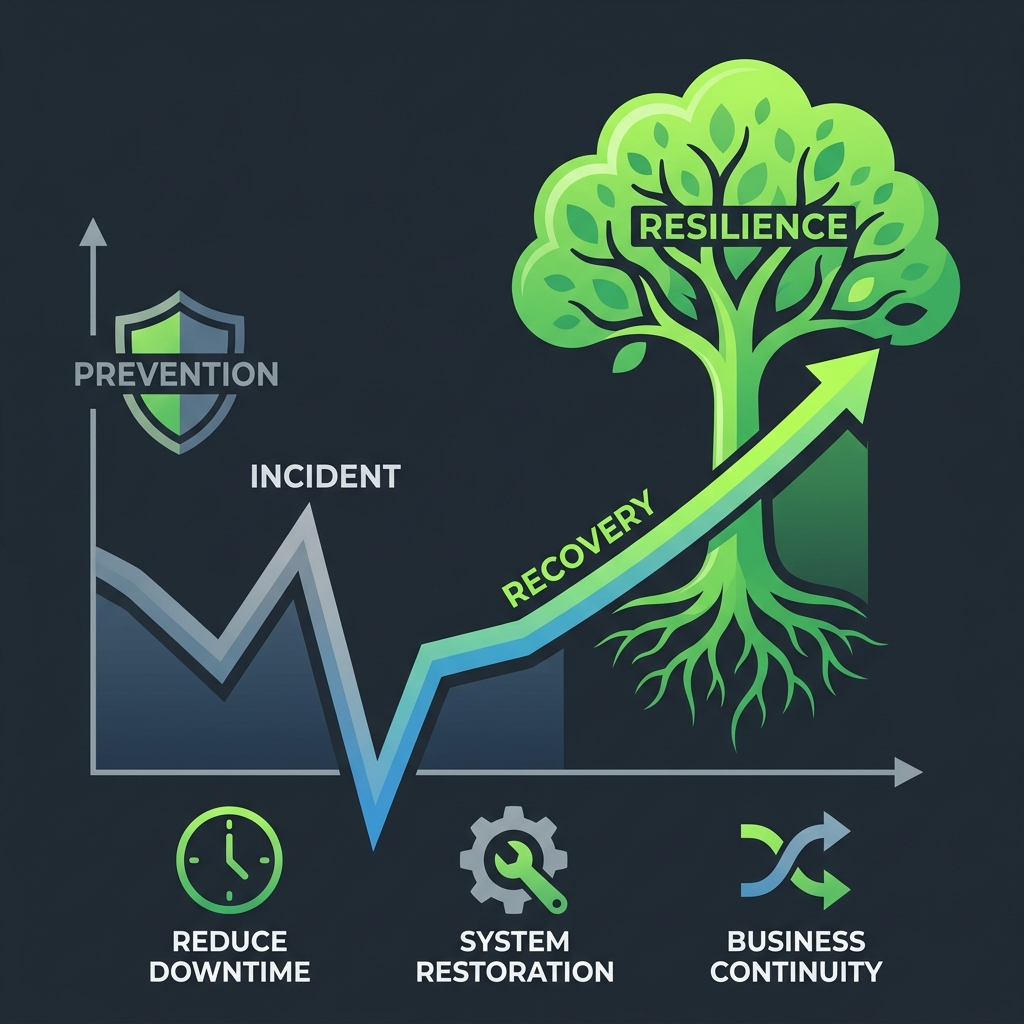
Prevention is important — but recovery determines resilience. No matter how strong your cybersecurity program is, incidents will still occur. What matters most is how quickly and effectively you can recover.
Recovery planning is one of the most critical — and most overlooked — cybersecurity capabilities.
Why Recovery Scores Are Often Low
Organizations struggle with recovery because:
- Plans are outdated
- Roles are unclear
- Recovery steps are incomplete
- Testing is infrequent
- Communication is inconsistent
- Integrity verification is missing
- Dependencies are not documented
These gaps create significant risk.
What NIST CSF Requires
The Recovery categories (RC.RP and RC.CO) include outcomes such as:
- Executing recovery plans
- Verifying asset integrity
- Restoring systems
- Confirming normal operations
- Communicating recovery status
These are essential for resilience.
Why Recovery Matters More Than Prevention
Recovery:
- Reduces downtime
- Minimizes impact
- Protects reputation
- Supports continuity
- Strengthens resilience
- Builds confidence
Prevention reduces likelihood — recovery reduces consequences.
How CyberDynamX Strengthens Recovery
The CyberDynamX programs support recovery maturity by:
- Identifying recovery gaps
- Prioritizing recovery improvements
- Providing recovery execution guidance
- Delivering governance alignment
- Offering incident response procedures
- Supporting leadership engagement
This creates a complete recovery improvement path.
The Result
Organizations gain:
- Faster restoration
- Stronger resilience
- Reduced impact
- Higher maturity
- Better continuity
Recovery is the backbone of resilience.
Find out how good your recovery planning is: The Assessment
