
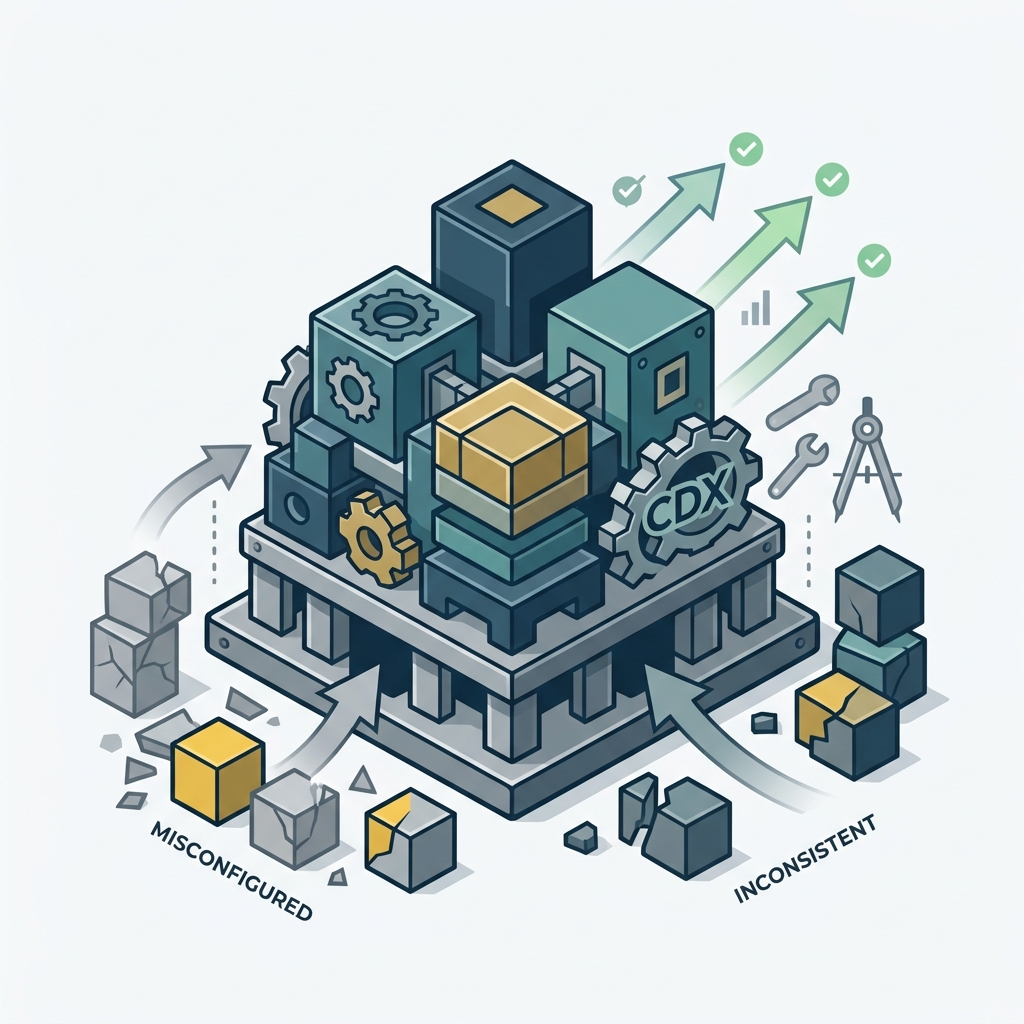
Platform security and configuration management are foundational cybersecurity capabilities — yet they are often underdeveloped. Many organizations score lower in this category than expected, revealing hidden risks that can lead to major incidents.
Configuration management determines how secure your systems truly are.
Why Platform Security Scores Are Low
Organizations struggle with platform security because:
- Baselines are missing
- Configurations vary across systems
- Hardening is inconsistent
- Legacy systems complicate enforcement
- Monitoring is incomplete
- Documentation is outdated
- Responsibility is unclear
These gaps create silent vulnerabilities.
What NIST CSF Requires
The Platform Security category (PR.PS) includes outcomes such as:
- Applying configuration management practices
- Generating log records
- Protecting platform integrity
- Ensuring consistent hardening
- Monitoring platform activity
These are essential for secure operations.
The Consequences of Weak Platform Security
Weak platform security leads to:
- Misconfigurations
- Privilege escalation
- Unauthorized access
- Malware persistence
- Lateral movement
- Data exposure
Configuration errors are one of the most common causes of breaches.
How CyberDynamX Helps Improve Platform Security
The CyberDynamX Assessment Program identifies platform security gaps with precision. The Matrix highlights platform subcategories that fall into the NOW or NEXT tiers.
The Governance Enablement Program supports platform maturity by providing:
- Configuration and baseline hardening standards
- Logging and monitoring standards
- Network security standards
- Baselines for server, endpoint, and network device security (Tier 3)
This creates a complete platform security improvement path.
The Result
Organizations gain:
- Stronger configurations
- Reduced vulnerabilities
- Better monitoring
- Higher resilience
- Improved maturity
Platform security becomes a strength instead of a weakness.
Get the assessment to see how your organization scores: The Assessment
