
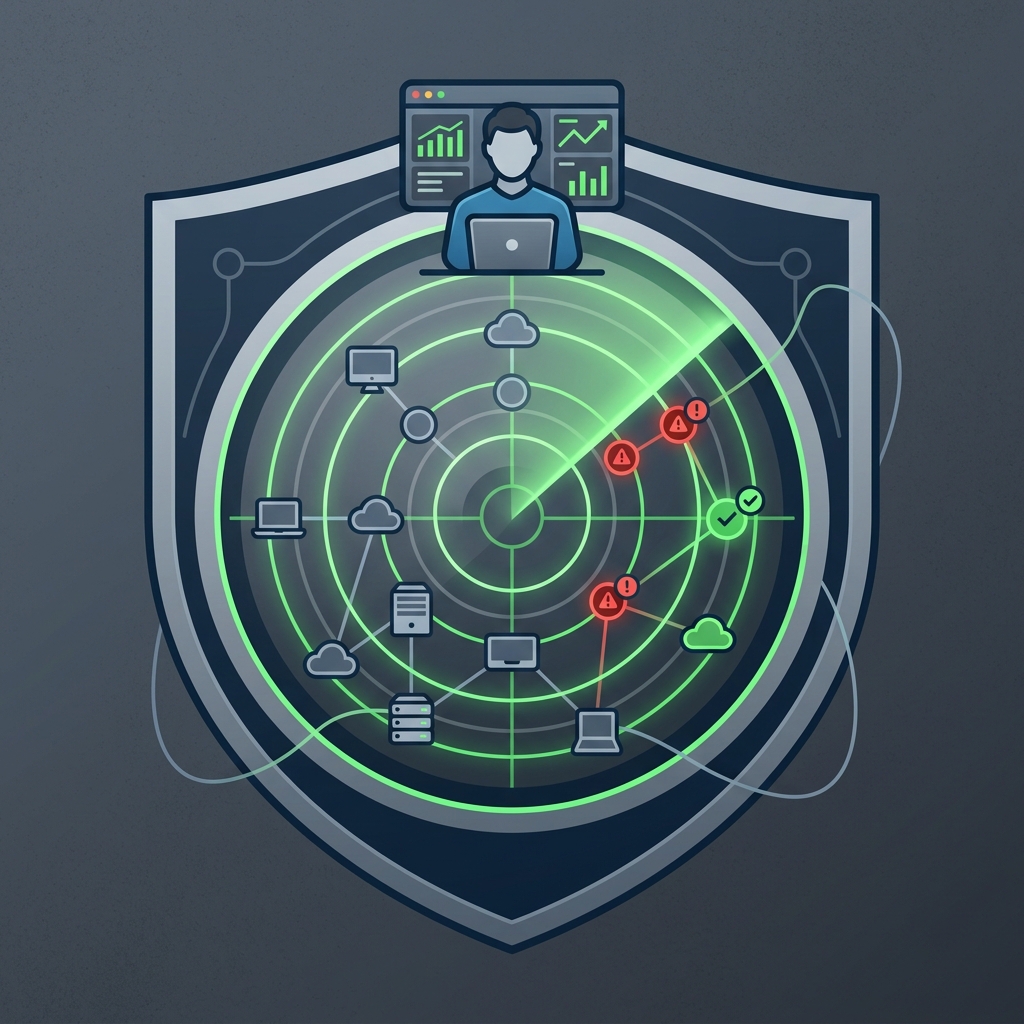
Continuous monitoring is one of the most important cybersecurity capabilities — and one of the most commonly underdeveloped. Many organizations score low in this category, often falling into the NOW priority tier.
This isn’t due to lack of effort. It’s due to the complexity of monitoring modern environments.
Why Continuous Monitoring Is Challenging
Organizations struggle with continuous monitoring because:
- Networks are complex
- Cloud environments expand rapidly
- Logs are inconsistent or incomplete
- Tools are not integrated
- Alerts are overwhelming
- Staffing is limited
- Monitoring responsibilities are unclear
These challenges make it difficult to detect adverse events quickly.
What NIST CSF Requires
The Continuous Monitoring category (DE.CM) includes outcomes such as:
- Monitoring networks
- Monitoring systems
- Monitoring services
- Monitoring for anomalies
- Monitoring for indicators of compromise
These are essential for early detection.
The Risk of Weak Monitoring
Weak monitoring increases the likelihood of:
- Undetected breaches
- Lateral movement
- Data exfiltration
- Ransomware spread
- Delayed response
- Increased impact
Monitoring is the difference between a minor incident and a major breach.
How CyberDynamX Helps Improve Monitoring
The CyberDynamX Assessment Program identifies monitoring gaps with precision. The Matrix highlights monitoring subcategories that fall into the NOW tier.
The Governance Enablement Program supports monitoring maturity by providing:
- Logging and monitoring standards
- Network security standards
- Baselines for logging and monitoring security (Tier 3)
- Incident response procedures
This creates a complete monitoring improvement path.
The Result
Organizations gain:
- Faster detection
- Better visibility
- Reduced impact
- Higher resilience
- Stronger maturity
Continuous monitoring becomes a strength instead of a weakness.
See the CyberDynamX Assessment: The Assessment
